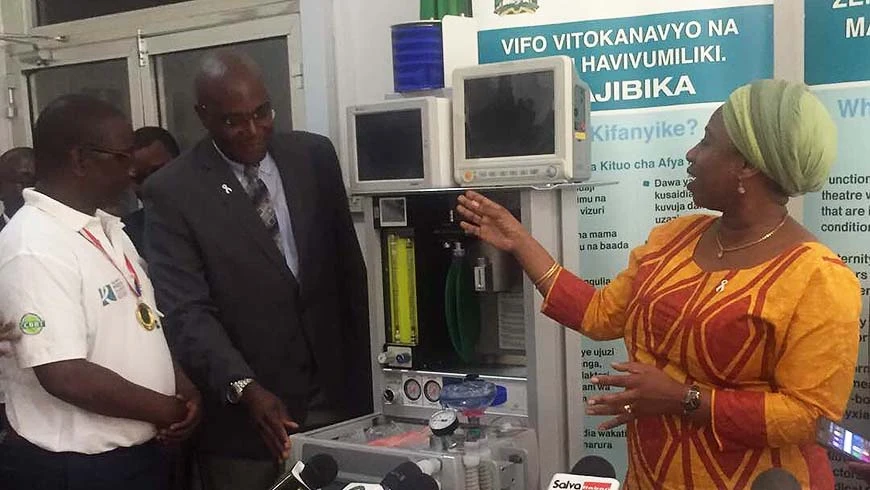
Ummy Mwalimu, the Tanzania’s minister for health said maternal mortality rate has increased from 432 in the year 2014 to 556 in 2015. The main causes for the increased number of maternal mortality is associated with over bleeding of mothers while giving birth, bacteria infection and epilepsy in pregnancy.
Out of 100 pregnant women, only 51 are reported to be attending their antenatal clinic.
Minister Ummy also revealed that, Tanzania is among the sub Saharan country that is determined to reduce the number infant mortality by 80 per cent come the year 2020.
Tanzania is one of the Sub Saharan country that has had for a long time, a growing mortality rate of children below the age of five.
Critical shortage of physicians especially in Tanzania’s remote areas is largely to blame. Responding to such crisis though, has led most sub-Saharan countries to scaled up training of non-physician clinicians (NPCs), resulting in a gradual but decisive shift to NPCs as the cornerstone of health care delivery.
Others are calling it the evolution of “non-physician clinicians” (NPCs), that assume some physician roles and thus mitigate the continuing shortage of doctors in these countries.

Other direct main causes of these deaths as reported by World Health Organization (WHO) are haemorrhages, infections, unsafe abortions, hypertensive disorders and obstructed labours.
The presence of these causes is intensified by HIV and malaria, Tanzania’s number one killer.
The fact that more than half of births in Tanzania occur at home also contributes to the elevated maternal mortality rate. In some Tanzania’s remote areas where health centres are far, some pregnant women prefer giving birth at home.
But since 2000, some hope has been registered as more children live to see their 5th birthdays. This decline is said to have saved the lives of 48 million children under age five.